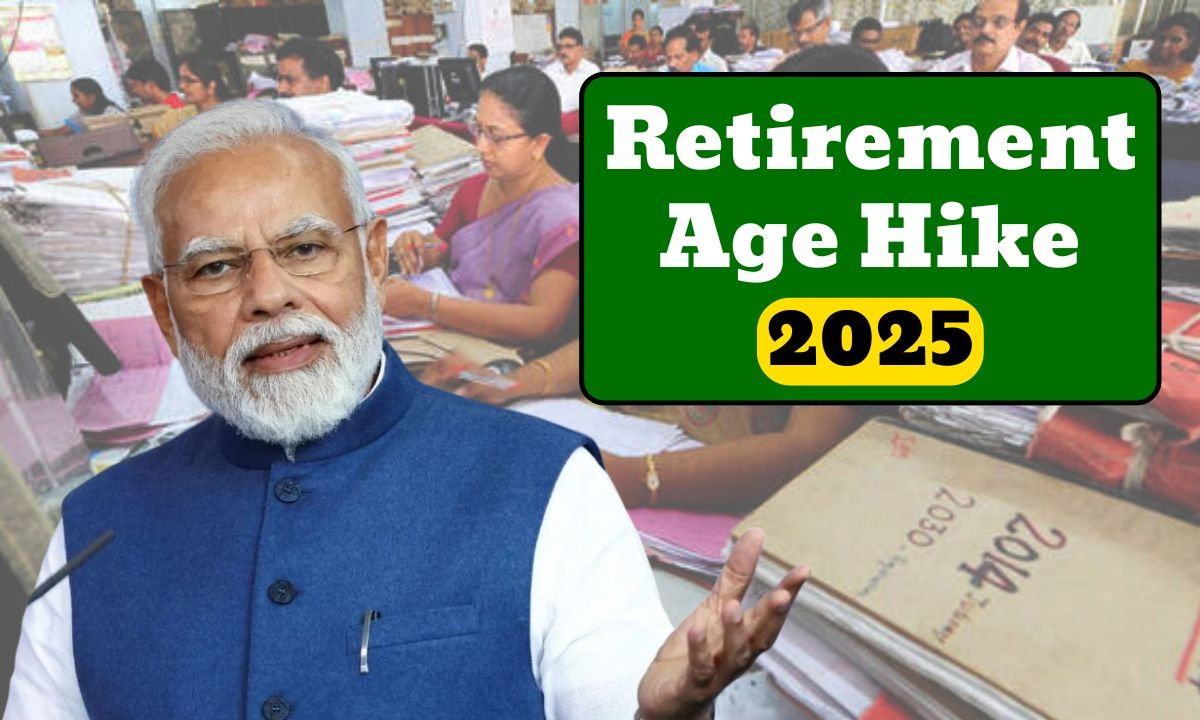
India’s government is actively evaluating a major retirement age reform in 2025, with proposals to raise the standard retirement limit for central government employees from 60 to 62 years, potentially effective from January 1, 2025. The plan, discussed in Cabinet deliberations and parliamentary sessions, aims to retain skilled professionals at a time when India is witnessing both an ageing population and talent shortages across key sectors.
While the proposal is not yet officially approved, reports linked to the Press Information Bureau (PIB) and the Ministry of Finance suggest that a two-year service extension is under serious consideration. If implemented, the decision would impact millions of government employees, including those in railways, banking, education, defense-linked civil roles, and public administration.
This move also aligns India with global workforce trends, where life expectancy has now crossed 70 years and countries are extending working lives to maintain productivity and economic momentum.
Why the Government Is Considering This Retirement Age Hike
India’s demographic structure is changing rapidly. Falling birth rates and rising longevity are shrinking the active workforce while increasing pension liabilities. The proposed 2025 retirement age hike directly addresses this economic imbalance.
By allowing employees to work for two additional years, the government could:
- Reduce pension payouts in the short term
- Retain experienced talent in critical sectors
- Delay recruitment pressure in departments facing staff shortages
- Save an estimated 15% of early retirement-related costs
Key industries like IT services, healthcare, manufacturing, railways, and education reported vacancy levels touching 20% in 2024, highlighting the urgency of retaining seasoned professionals.
Supporters also note that longer service boosts:

- Final salary-based pension calculations
- Promotion opportunities
- Long-term retirement corpus under NPS and pension schemes
However, critics warn that delayed retirements may slow down youth recruitment, especially in competitive government exams. The government is expected to balance both concerns through phased implementation and sector-specific exemptions.
Who Will Benefit Most If the Hike Is Approved?
If the retirement age increase to 62 years is cleared, the biggest beneficiaries would be:
- Central government employees – civil services, railways, income tax, customs
- Government teachers and professors
- Public sector banking and insurance staff
- Certain armed forces categories (where current limits range from 60–62)
Key Eligibility Expectations:
- Likely to apply first to new recruits
- Employees below 58 years in 2025 may receive automatic extensions
- State governments may adopt the move gradually after central approval
- Private sector firms may follow voluntarily to retain senior executives
Women employees and socially marginalized groups may see additional employment security, especially due to longer eligibility windows for benefits, promotions, and pension growth.
Notably, High Court judges already retire at 62, and top armed forces leadership also aligns closely with this age—meaning no major changes are expected for these categories.
Expected Implementation Timeline and Key Challenges
If final approval is granted, the new retirement age could take effect from:
January 1, 2025

Likely Implementation Features:
- Transitional provisions for employees nearing retirement
- Pension recalculations based on extended service
- Revised promotion pipelines
- Mandatory health and medical fitness assessments for extended tenure
Major Challenges Ahead:
- Managing intergenerational equity between youth and senior employees
- Addressing health readiness for extended service
- Preventing workplace age discrimination
- Department-specific productivity benchmarks
States such as Uttar Pradesh and Maharashtra are already reported to be examining pilot extensions, with impact studies underway before full-scale adoption.
Retirement Age Comparison Across Sectors (2025 Proposal)
| Sector | Current Age | Proposed 2025 Age | Key Impact |
|---|---|---|---|
| Central Government | 60 | 62 | Higher pensions, extended careers |
| Armed Forces (Officers) | 60–62 | 62–63 | Retains defense expertise |
| Judiciary (High Courts) | 62 | 62 | No change |
| Private Sector (Voluntary) | Varies | 60–62 | Better talent retention |
| State Governments | 58–60 | 60–62 | Gradual alignment with Center |
This comparison shows how the proposal could standardize retirement norms across major employment segments.
What Employees Should Do Right Now
If you are approaching retirement within the next few years, this proposal could directly influence your financial planning. Here’s what you should prepare:
- Review your service records and promotion eligibility
- Update health and medical fitness details
- Track your NPS and pension projections
- Consult HR about voluntary extension options
- Families should plan for delayed retirement income transitions
Since pension calculations improve significantly with even two extra years of service, the long-term financial impact could be substantial.
Final Outlook: A Strategic Workforce Shift for India
The Indian Retirement Age Hike 2025 reflects a bold shift toward longevity-based workforce planning. By extending careers from 60 to 62 years, the government aims to strike a balance between:
- Economic productivity
- Pension sustainability
- Talent retention
- Long-term fiscal stability
While the final approval is still awaited, the direction is clear—India is preparing for a longer, more experienced working population. If executed wisely, this reform could strengthen governance, improve service delivery, and boost individual retirement security.
